
Limit the noise, not the music
Sound level limiter-recorder and 24-bit digital audio processor in a 19" rack unit (1U). Spectral limiting in 1/3 octave bands, SMART algorithm without compression, two independent channels, analogue and AES/EBU inputs and outputs, and configuration from any web browser.
Dynamic range, A-weighted (110 dB unweighted)
Typical THD + noise @ +4 dBu, 1 kHz
Analogue IN-OUT latency @ 48 kHz (0.04 ms digital @ 96 kHz)
Of data logging and time scheduling without assistance
A limiter designed by and for sound engineers
The SPXOne is inserted in the audio chain between the mixing desk or source and the amplification. It measures the sound pressure level in the room with one or two measurement microphones and controls the signal in real time so that the configured limits are never exceeded, while preserving the quality of the sound system.
Spectral limiting in 1/3 octave bands
21 bands from 50 Hz to 5 kHz, as required by regulations. Three limiting algorithms to suit each venue and each music programme.
No compression, no spectral changes
The SMART algorithm holds the programmed maximum level by adjusting the volume only: it does not compress the signal, does not alter the emission spectrum and produces no abrupt level changes.
Two channels, two limiters
One stereo limiter that preserves the stereo image, or two independent limiters for two rooms or zones with their own music, each controlled by its own microphone.
Analogue and AES/EBU
Balanced XLR inputs and outputs with RF filtering and adjustable levels (+14 / +22 / +28 dBu input, +14 / +20 / +24 dBu output). AES/EBU digital audio at 48, 96 or 192 kHz.
32-bit processing
24-bit A/D and D/A conversion, two CPUs with FPU and 32-bit floating-point internal processing. 31-band graphic equaliser (20 Hz – 20 kHz) on each input.
Every tool a sound engineer needs
RTA of each input with an editable limiting curve, RTA of each microphone, 31-band GEQ, pink noise generator, automatic calibration, presets and a live mode for adjustments during a show.
The music follows the crowd, with no hands on the volume
The SPXOne automatically adjusts the music level to the venue's background noise, that is, the ambience created by the audience itself. With the room nearly empty, the music plays softly; as guests arrive and the hum of conversation rises, the level goes up so the music can still be heard clearly. When the venue empties, it comes back down.
- Automatic. Staff do not need to touch the volume all day.
- Always within the limit. The adaptation works below the programmed maximum level: regulatory compliance is unchanged.
- Designed for restaurants. Background music that is present during service and discreet in quiet moments, supporting conversation without overpowering it. Also for cafés, hotels and function rooms.
All connections on the rear panel
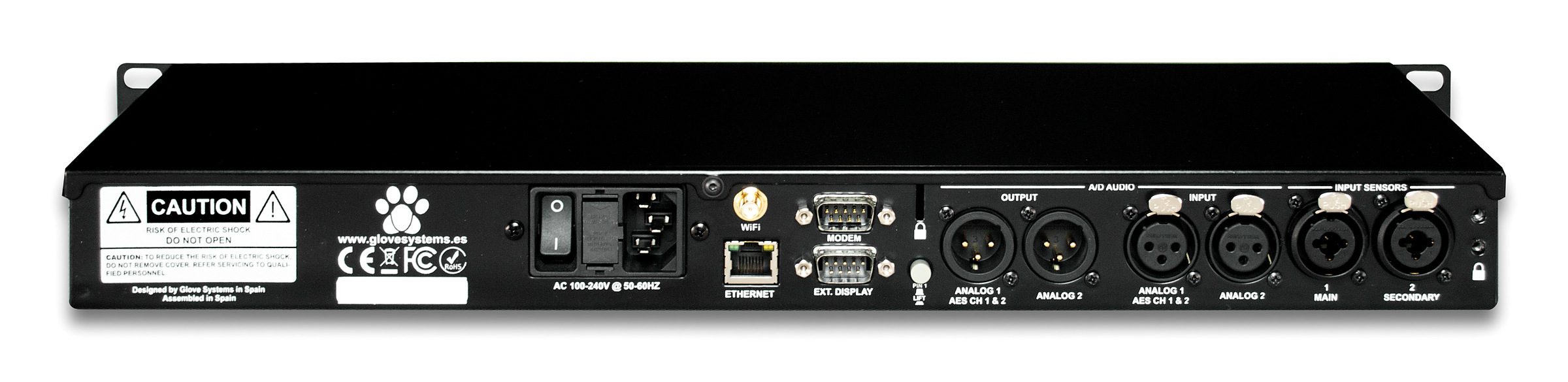
19" rack, 1U. Latching XLR inputs and outputs, two sensor inputs, Ethernet, Wi-Fi with external antenna and universal 100 – 240 V power supply.
One stereo source · one room
- L and R from the desk to INPUT 1 and INPUT 2; OUTPUT 1 and 2 to the room amplification.
- Both channels are limited together as a stereo pair: the stereo image is preserved.
- MIC 1 measures the room; optional MIC 2 (second point or neighbouring room).
- Analogue inputs 1 + 2, or AES/EBU with both channels on one cable.
Two mono sources · two limiters
- A different programme on each input: two rooms or zones with their own music.
- INPUT 1 → OUTPUT 1 limited by MIC 1; INPUT 2 → OUTPUT 2 by MIC 2.
- Independent attenuation and its own maximum level for each room.
- Independent calibration of the two microphones.
Three limiting algorithms
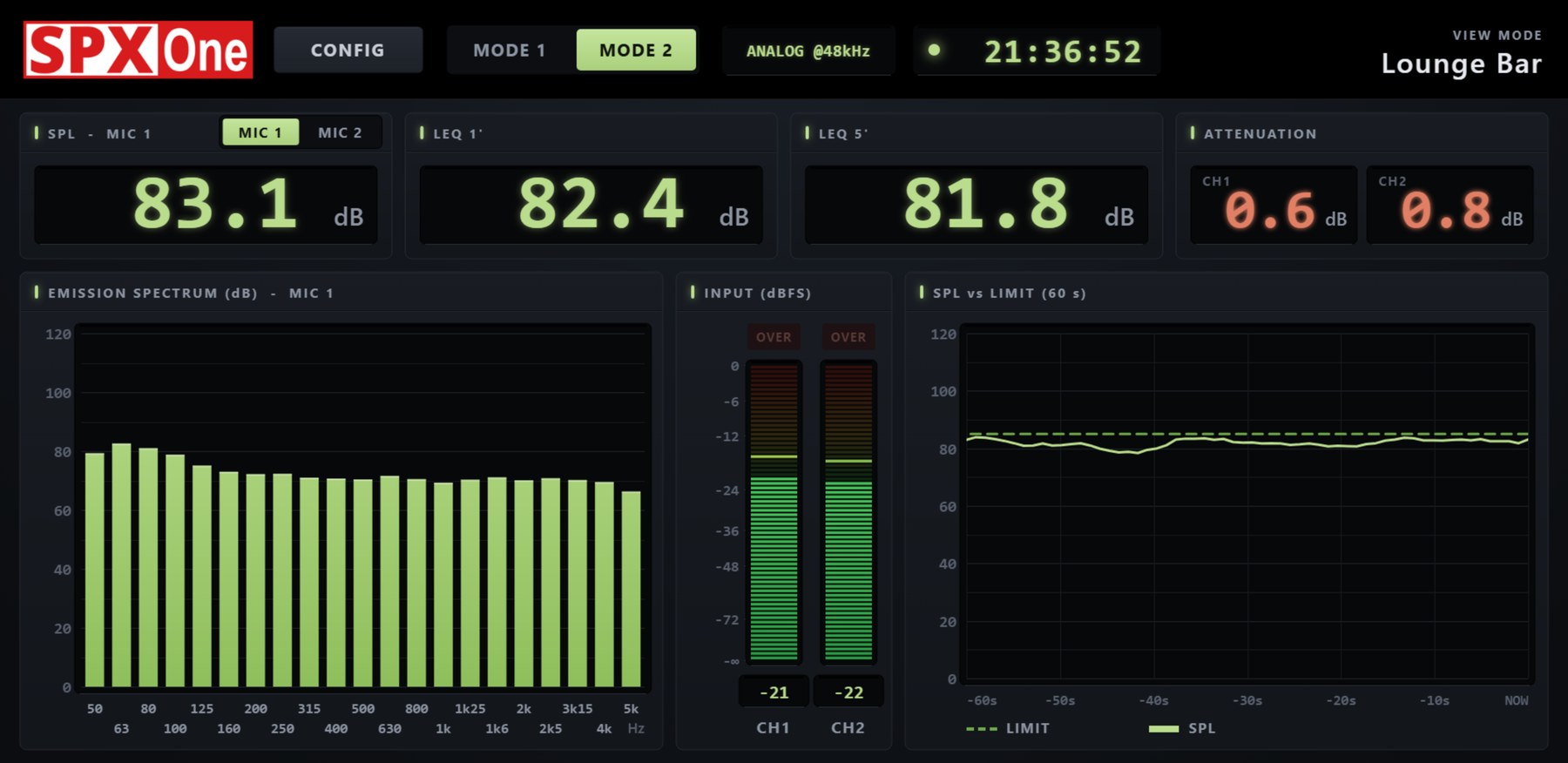
The RTA of each input shows the 1/3 octave spectrum together with the limiting curve, the microphone levels, the limit applied in each room and the attenuation. The limiting algorithm is selected on the same screen.
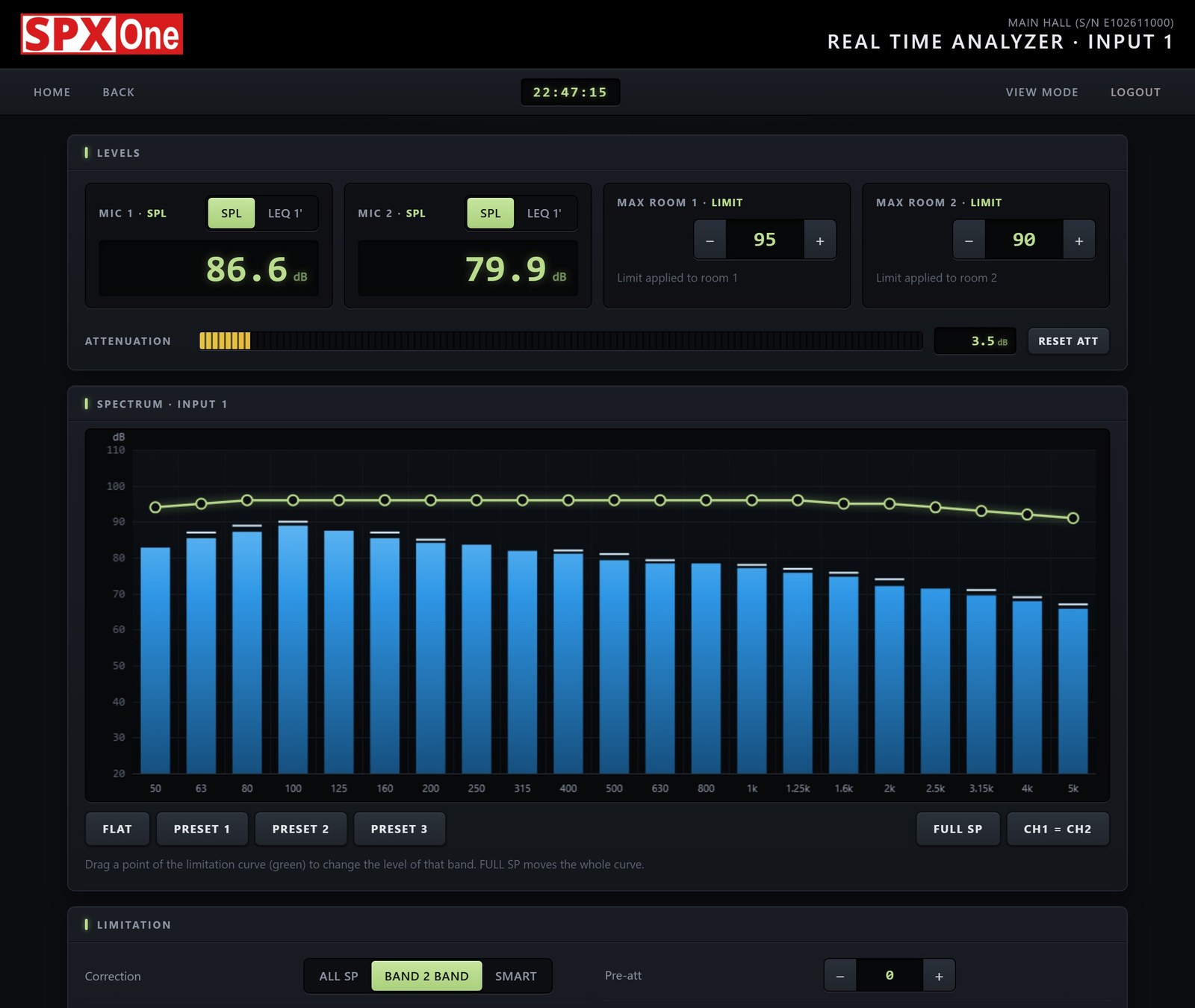
Constant maximum level, no compression
The SMART algorithm holds the programmed maximum level by adjusting the volume only. It neither compresses the signal nor alters the frequencies, and it produces no abrupt level changes: the music sounds the same, just quieter when needed. The SPXOne calculates the limiting automatically and the Smart Offset setting corrects the excess level caused by the dynamics of the music.
Attenuation is applied to the whole spectrum: broadband limiting.
Only the bands that exceed the limiting curve are attenuated; the rest of the spectrum is left untouched.
- Limiting curve editable point by point, shape presets and copy between inputs.
- Adjustable attack, release and pre-attenuation.
- Live mode for real-time changes during a performance.
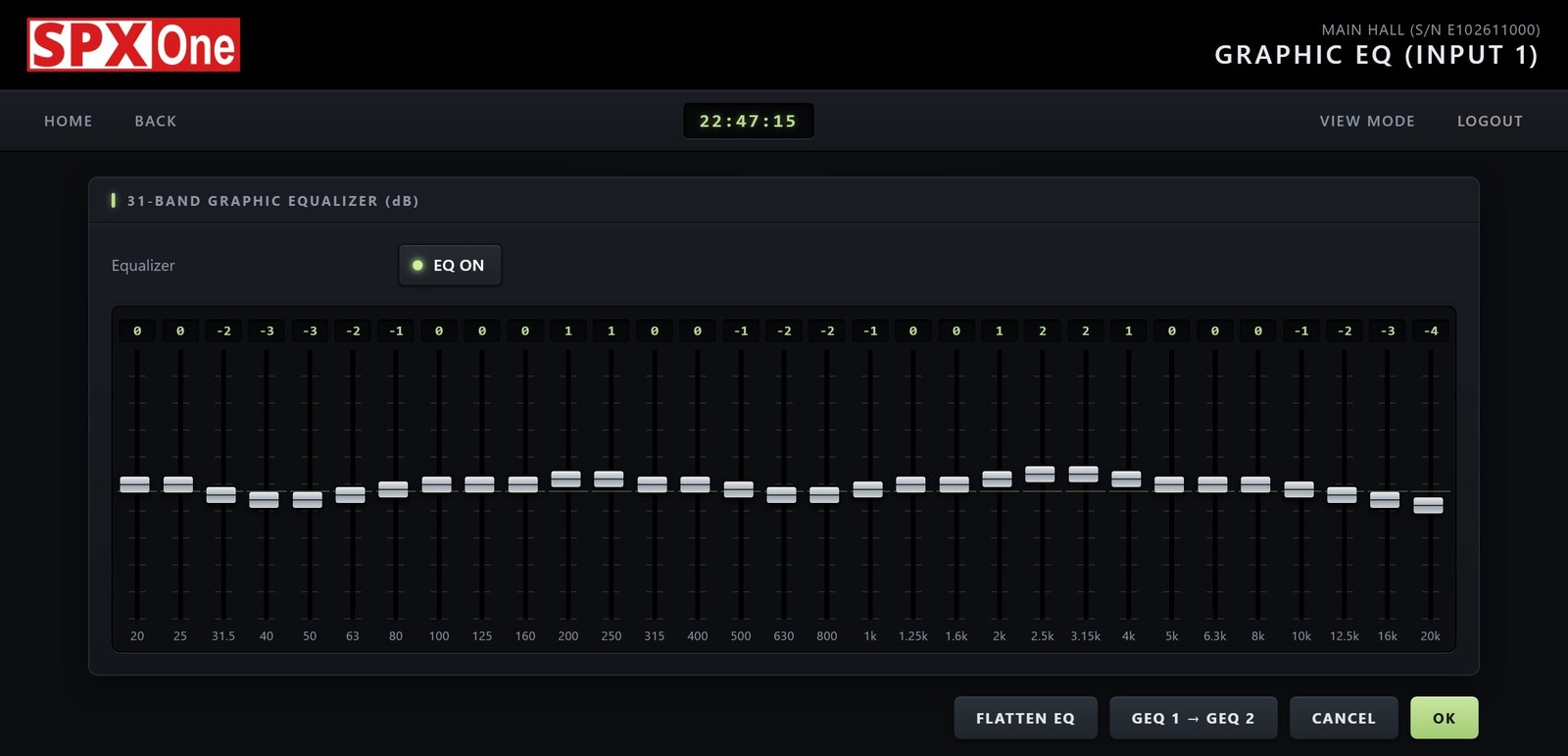
31-band graphic equaliser
Each input has a 31-band, 1/3 octave graphic equaliser from 20 Hz to 20 kHz to tune the sound system to the room. It is switched on and off with one button, reset with FLATTEN EQ and copied from one input to the other with GEQ 1 → GEQ 2.
Set up in four steps
Once the unit is installed and connected and the installation preset is selected, commissioning is done from the browser with a calibrated sound level meter.
Microphone offset
The built-in pink noise generator lets you match the reading of each microphone to that of a calibrated sound level meter.
Automatic calibration
With the room silent, the SPXOne emits pink noise and measures the relationship between the audio signal and the sound level in the room.
Maximum level
Quick mode (maximum level of each room) or extended mode, using the transmitted noise and the band-by-band insulation from the acoustic test.
Smart Offset
Fine adjustment of the excess level caused by musical dynamics. Then the audio connections are sealed.
In extended mode, the limiter takes into account the maximum level allowed in the receiving room and the sound insulation spectrum in bands from 50 Hz to 5 kHz (20 – 110 dB), normally obtained from the venue's insulation test. This makes the most of the level the insulation allows, without exceeding the limit in the adjoining dwelling.
Configure from any web browser
The SPXOne has a built-in web server: it is fully configured from a computer, tablet or smartphone, without installing any software, over the installation's Ethernet network or via Wi-Fi.
- Built-in web interface with the same functions as the SPXOne Control desktop application (Windows 8 / 10 / 11).
- View mode: full-screen sound level for venue staff or for monitoring, with no password and always available.
- Reports: data in CSV, an encrypted .REG1 file that guarantees the records have not been modified (inspections) and a PDF report of the configuration.
- Weekly time scheduling with 4 time slots (including mute), 20 periods and 30 special days.
- Clock synchronised via SNTP.
- Real-time data transmission over Ethernet and Wi-Fi to the control server.
OTA updates: always up to date
The SPXOne checks the update server when it connects and downloads new firmware in the background, without interrupting operation; the update is applied at the next restart. Your SPXOne is always up to date with the latest features.
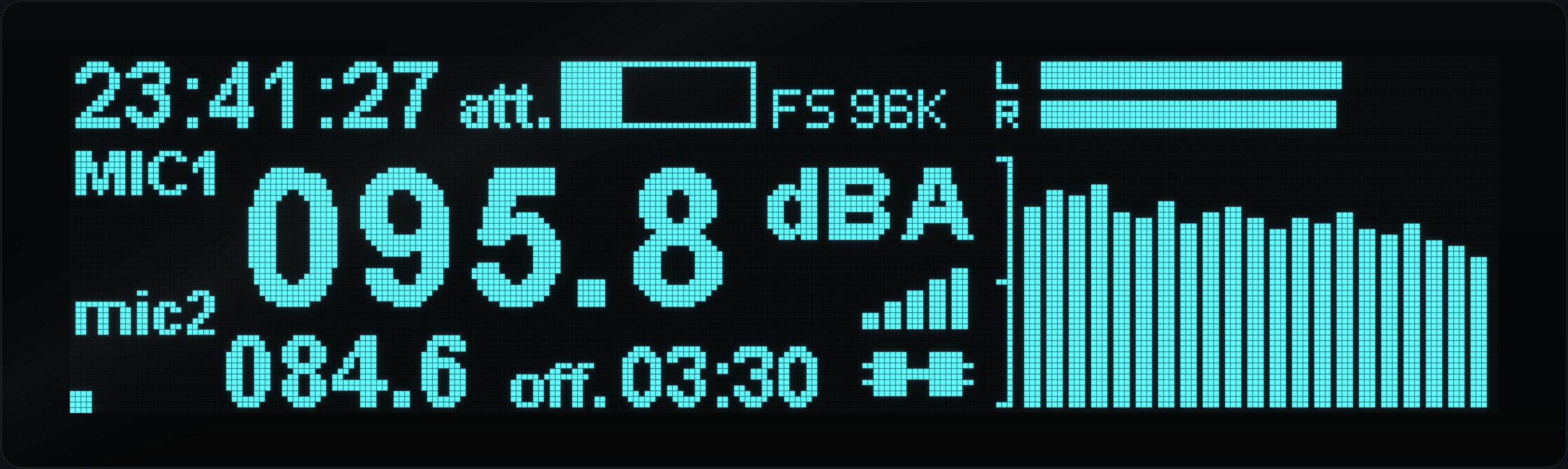
All the information on the front panel
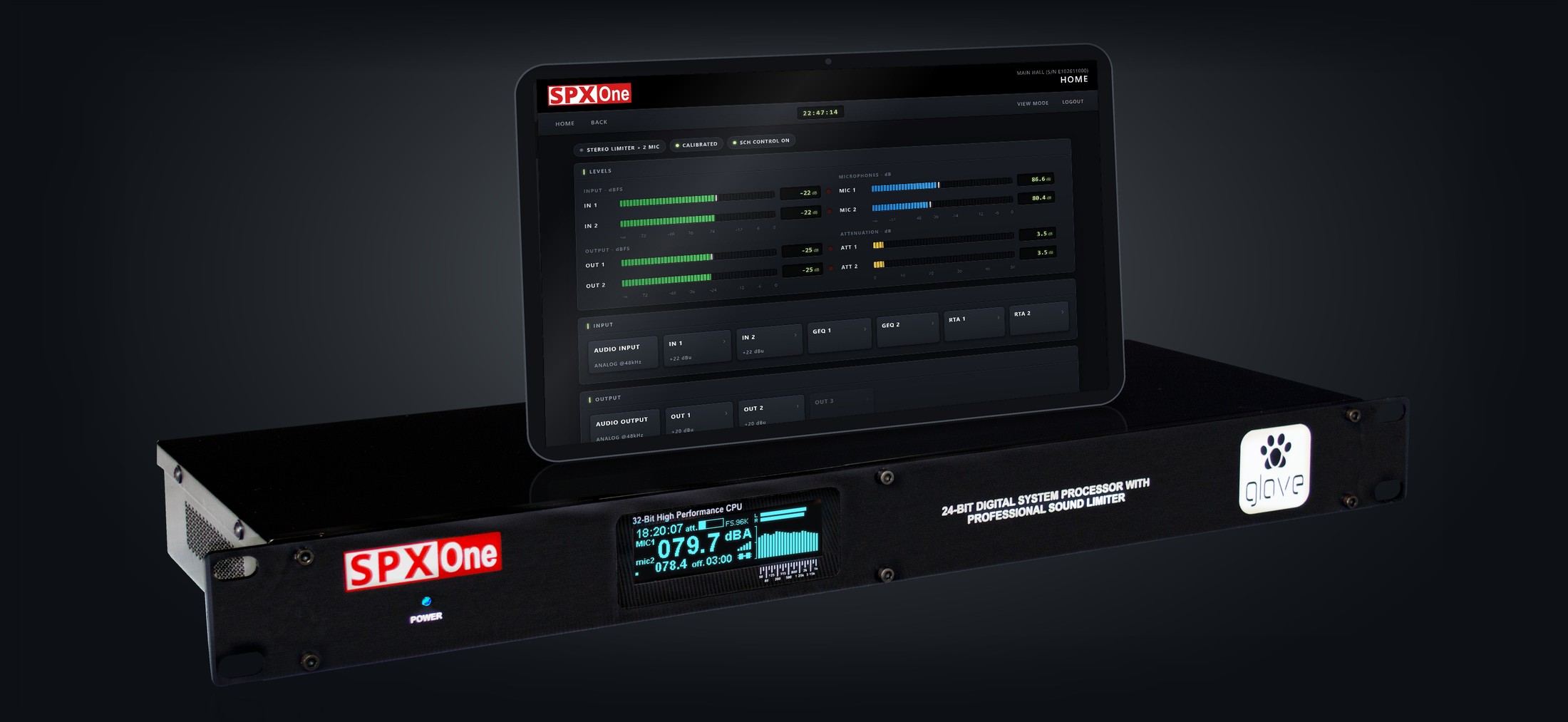
256 × 64 pixel OLED display on the front panel, readable at a glance from the rack.
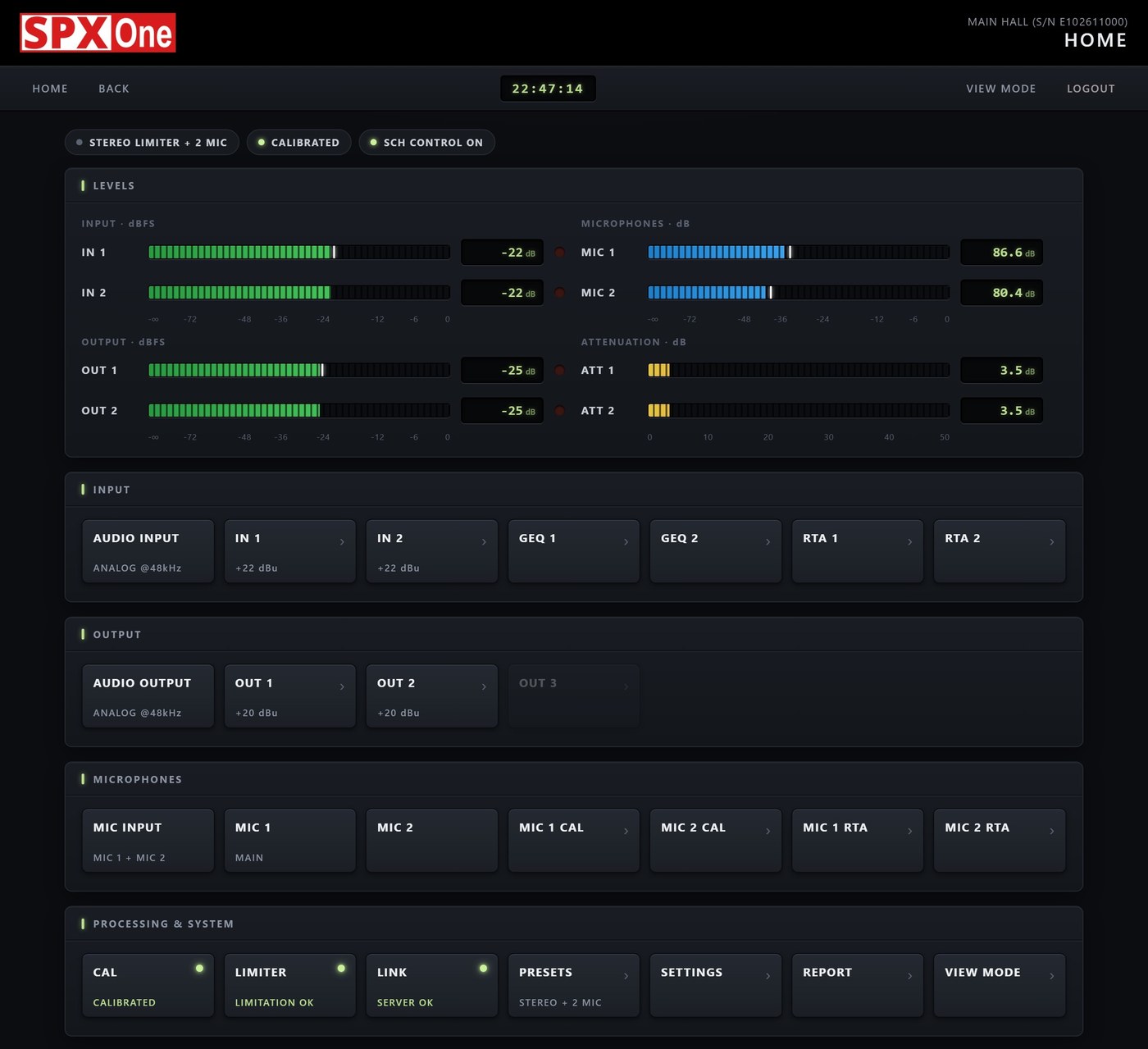
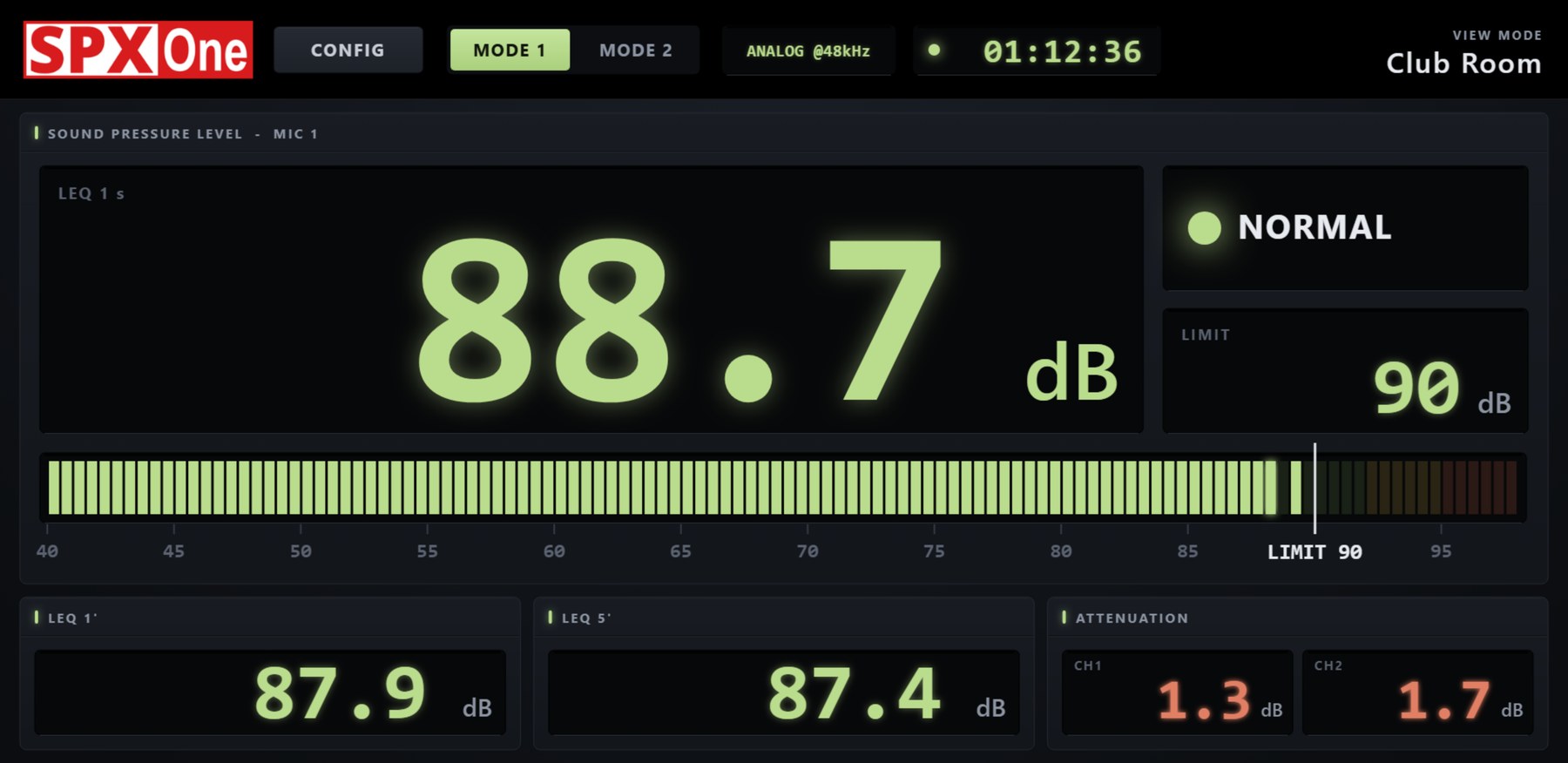
Full-screen sound level
This is the first screen when you connect to the SPXOne. It needs no password and allows no changes, so it can be left permanently open on a tablet or on a screen in the venue.
From the DJ booth to the main stage
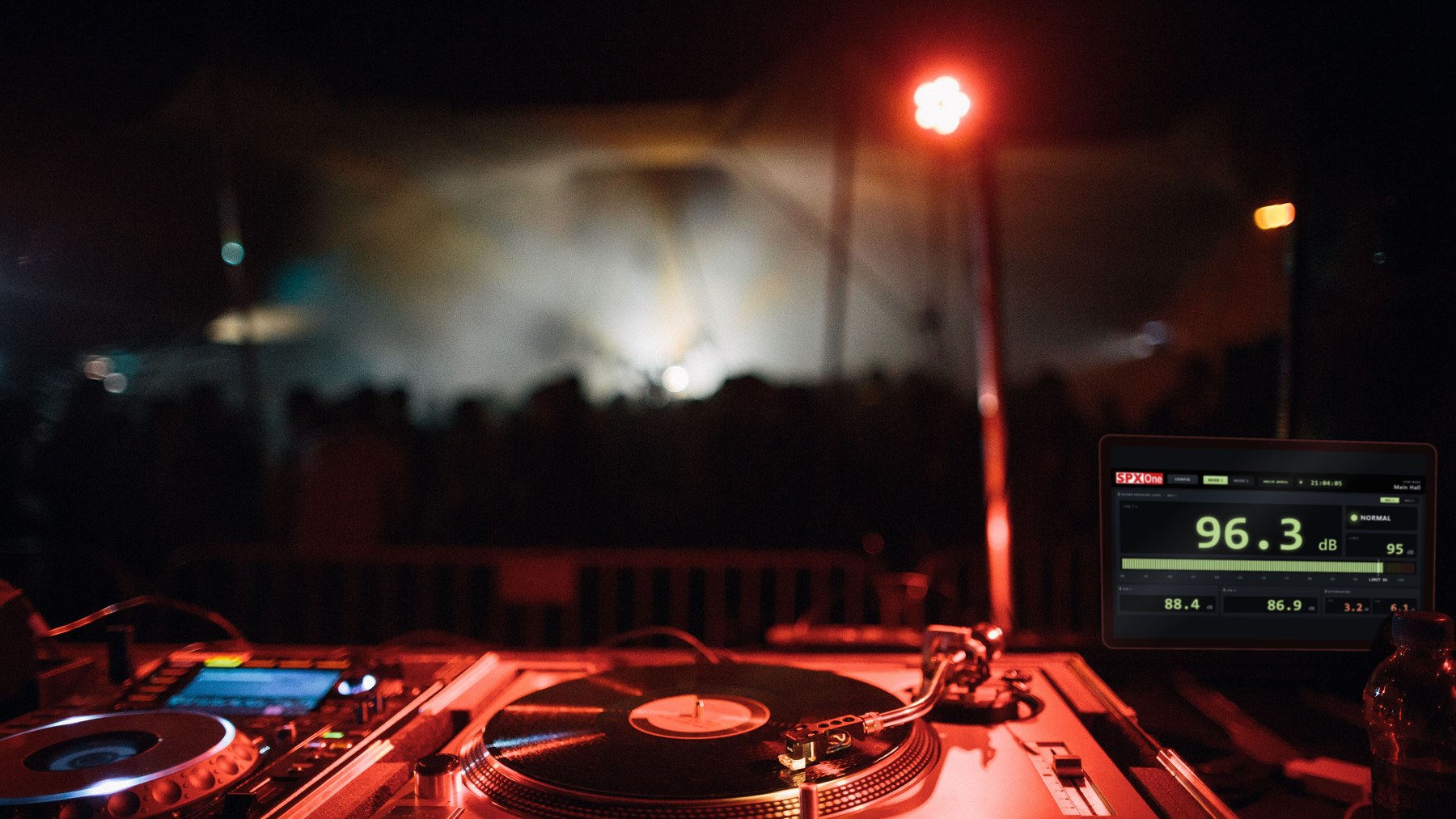
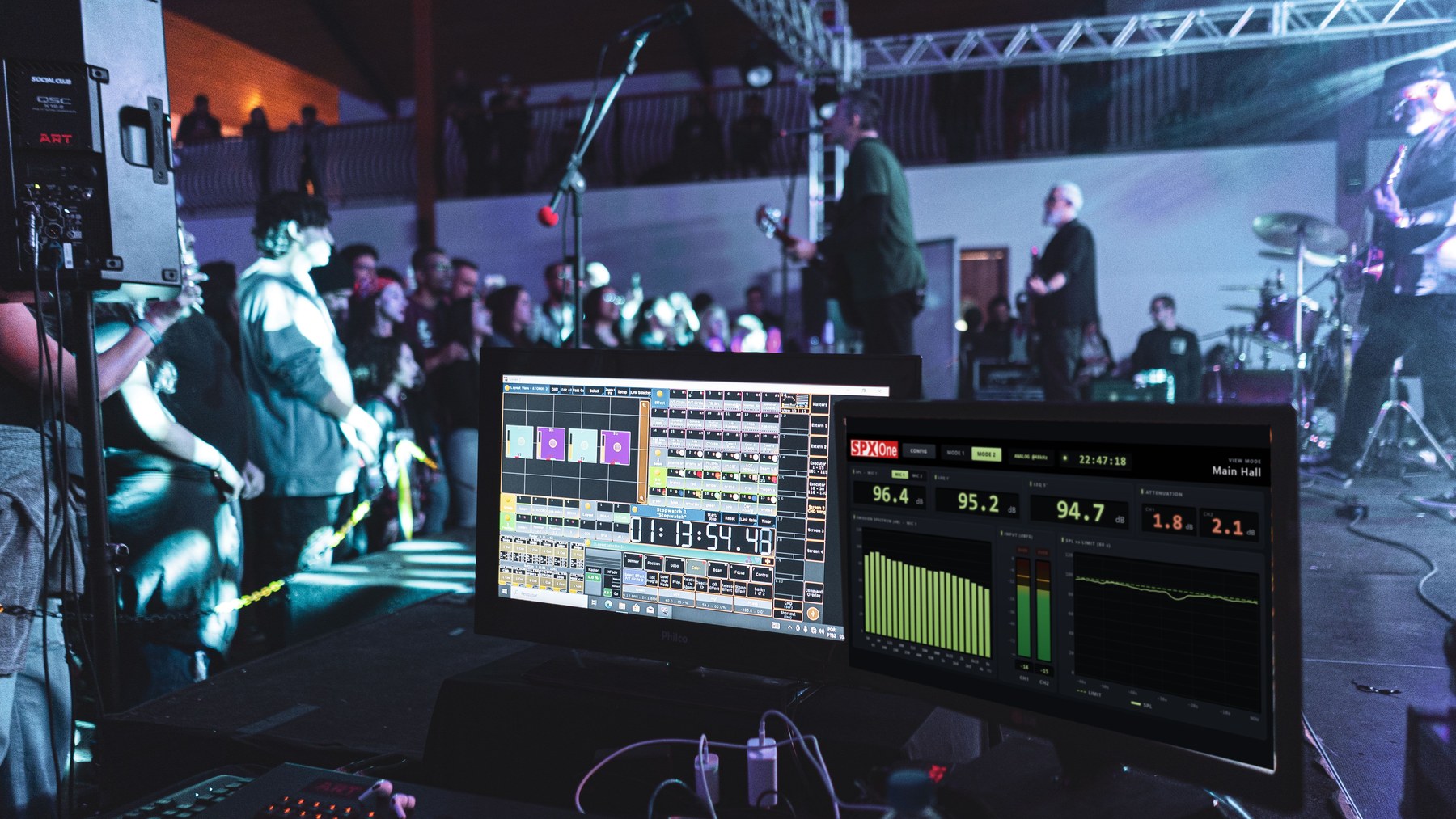
With view mode on a tablet, whoever is in charge of the sound sees the level, the limit and the attenuation at all times, and can adjust the mix before the limiter steps in.
Compliant with noise regulations
The SPXOne is certified as a sound level limiter-recorder in accordance with the noise regulations of the Spanish autonomous communities and Spanish municipal bylaws on protection against noise pollution, and with the noise regulations of the municipalities of Lisbon and Porto in Portugal.
Spain
Castilla y León
Ley 5/2009, de 4 de junio, del Ruido de Castilla y León (Castilla y León Noise Act 5/2009).
Andalusia
Requirements of Technical Instruction 6 of Decree 50/2025 of 24 February (Decreto 50/2025, de 24 de febrero).
Barcelona City Council
Barcelona Environment Bylaw (Ordenança del medi ambient de Barcelona), approved by the Municipal Council plenary on 25 February 2011.
Other autonomous communities
Regional regulations on noise and noise pollution.
Other municipalities
Municipal bylaws on environmental protection against noise and vibration.
Portugal
Lisbon
Câmara Municipal de Lisboa: sound limiter under the Regulamento dos Horários de Funcionamento dos Estabelecimentos de Venda ao Público e de Prestação de Serviços no Concelho de Lisboa.
Porto
Câmara Municipal do Porto: sound power limiter-recorder under the Regulamento da Movida do Porto.
Sound level limiting, logging of levels and incidents, time scheduling, sealing of connections and communication with the server. Certificates available in Downloads.
Remote monitoring and configuration of your installations
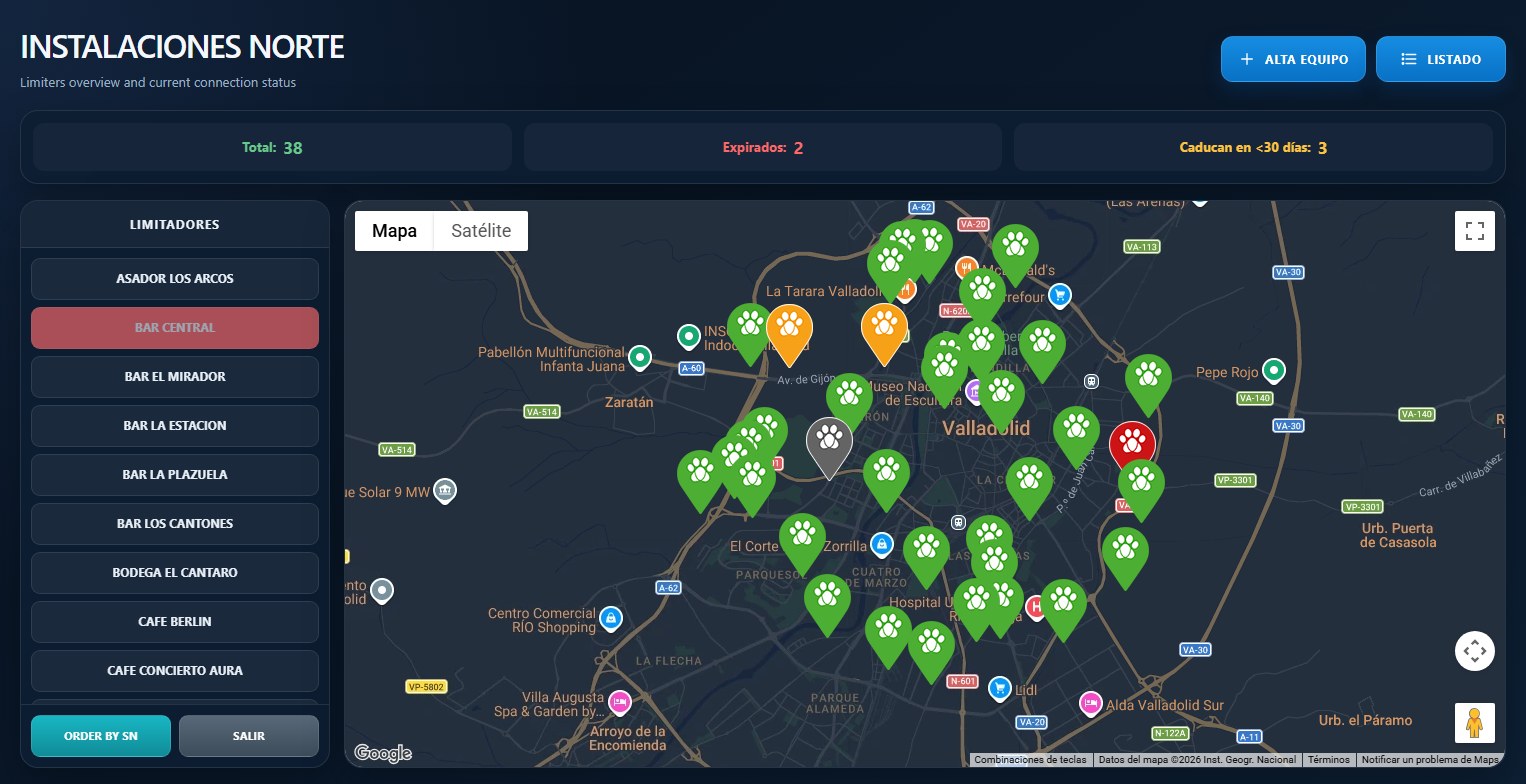
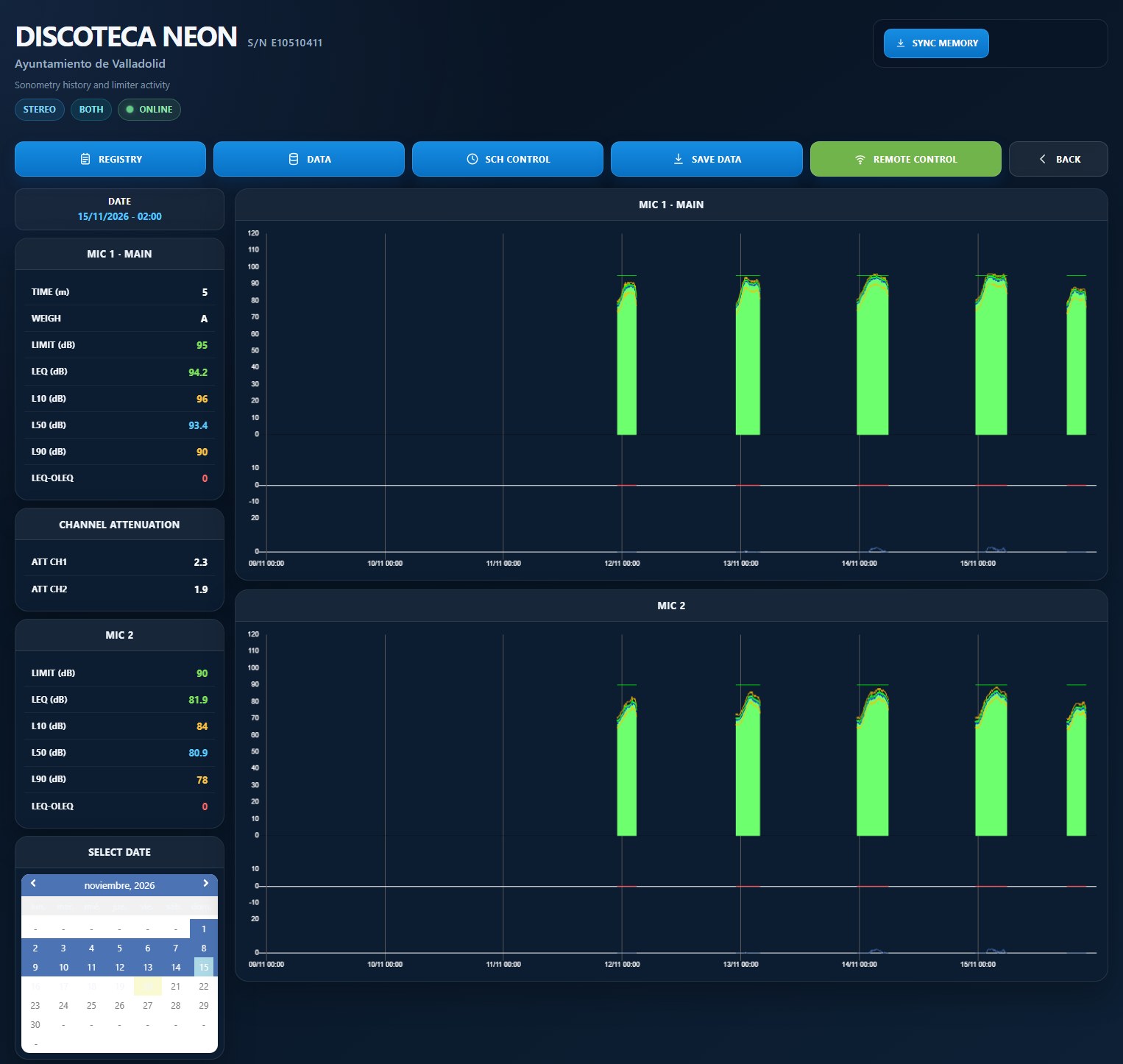
SPXOne units linked to the server transmit their data in real time to the Control WEB platform. Municipalities, installers and venue owners see all their limiters on a map, with the connection status of each venue, the list of units and expiry warnings.
Control WEB also lets you change the configuration of each limiter remotely, even if the unit is not connected at that moment.
- Map of limiters with their status
- List of venues and search by serial number
- Totals, expired units and units about to expire
- Remote configuration, even with the limiter disconnected